While LED automotive bulbs deliver superior performance and efficiency, their significant heat output requires careful management. Effective heat dissipation is critical - without proper thermal control, LED bulbs face reduced performance and shortened lifespan. Dedicated to providing a comprehensive solution to the pressing thermal issues associated with LED bulbs, this article provides a comparative analysis of fanless LED headlights and fan LED headlights, analyzing the advantages and disadvantages of each. By the end, readers will be equipped with the knowledge necessary to make an informed choice when selecting their favorite LED bulbs. Join us as we explore this critical aspect of automotive lighting.

There are generally two methods for cooling LED headlights: the first is a fanless LED headlight Bulb (passive cooling) and the second is a fan LED headlight bulb (active cooling). They are both designed to dissipate heat from the LED bulb by maximizing the transfer of bulb heat to ensure proper bulb performance operation. So why do LED bulbs need to dissipate heat, take a look.
Heat is an important factor affecting the life of LED bulbs. LEDs are temperature sensitive and prolonged exposure to high temperatures will degrade their performance and shorten their lifetime. With effective heat dissipation, LED bulbs can operate within the recommended temperature range, extending their lifespan and maintaining stable performance.
We can see in the data in the table below that as the temperature of the environment in which the LED bulb is operating increases, i.e. heat builds up, its lifespan is much reduced.

One critical aspect of LED performance affected by heat is light quality. Given that LEDs function as semiconductors, their behavior is intricately tied to temperature variations. Excessive heat can cause its color cast or even color distortion. In addition, the light output of LED bulbs will decrease significantly as the temperature increases. Adequate heat dissipation helps stabilize the temperature of the LEDs, ensuring consistent light quality and color rendering. We can see the following table, taking the amber yellow wavelength as an example, the light output is getting lower and lower after exceeding the junction temperature of the LED bulb (the highest temperature inside the LED device).

(Warm tip: If you want to learn more about the color temperature of bulbs and related factors, please read -CAR LED LIGHT BULB COLOR TEMPERATURE-- COMFORT AND SAFETY)
Efficient heat dissipation is critical to maintaining safe operating conditions. Excessive heat buildup can result in high temperatures, which can cause a fire or damage surrounding materials. With proper heat dissipation, LED bulbs can prevent overheating and maintain a safe temperature for the bulb and its surroundings.
All in all, inadequate management of excess heat can significantly compromise the efficiency of LED bulbs, potentially leading to premature degradation or failure. During the lighting process of the LED bulb, the lower the temperature, the brighter the LED light and the longer the light time.
(Warm Reminder: To delve deeper into the significance of heat dissipation for bulbs and recommendations for LED bulbs with optimal heat dissipation, kindly refer to - "THE IMPORTANCE OF HEAT DISSIPATION IN AUTOMOTIVE LED HEADLIGHT BULBS")
Therefore, most of the high-quality LED bulbs on the market today are equipped with a basic heat sink, and the aluminum material itself can help facilitate heat conduction and dispersion. In addition, the current LED bulb market can be roughly divided into two types: active cooling and passive cooling LED bulb designs. Generally speaking, there are LED bulbs with fans and LED bulbs without fans. Next, let's introduce the method of cooling LED headlight bulbs.
The most important part of LED cooling is the heat path from the LED junction to the outside of the luminaire. The heat needs to be conducted away from the LEDs in an efficient manner and then removed from the area by some means of cooling or dissipation. Presently, three prevalent bulb designs address this requirement.
A radiator made of alloyed aluminum is the basic design of most high-quality LED bulbs today , which is cooled by the thermal radiation of the aluminum itself. The cooling energy of this radiator is very stable, but its volume determines how much it can dissipate heat. And if you want the LED bulb to be brighter, the bulb will generate more heat and the temperature will increase. Therefore, if we want better LED bulbs, we need to increase the heat dissipation of the bulbs. Further advancements have led to two widely embraced upgraded designs.

Copper braided heat sinks are made of tinned copper wire. The copper braid and wings are adjustable. It is mainly by increasing the surface area of the radiator and combining the good thermal conductivity of copper to increase the contact between the airflow and the surrounding environment, effectively dissipating heat from the LED bulb.

This method combines evident heat conduction through the LED bulb's aluminum body with fan-assisted cooling, intensifying heat dissipation. Yet, sole reliance on fan cooling has limitations in managing substantial heat loads over extended periods.
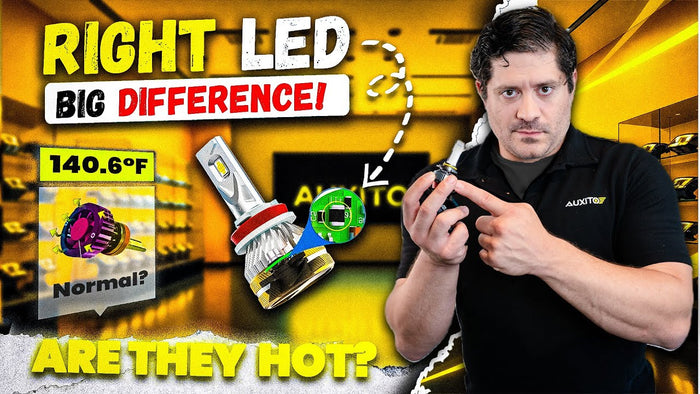
Technological strides have introduced copper substrates into certain premium LED headlight bulbs, facilitating swift and efficient heat transfer. This innovation outperforms pure fan-cooled LED bulbs by approximately 2-3 times. AUXITO’s fan-equipped LED bulbs are not only made of aerospace aluminum, but the board with the fan at the end is a copper substrate. Combining three heat dissipation advantages, it can basically meet the operation of high-power bulbs and ensure the high-efficiency performance and bright output of the bulbs.

Of course, in addition to the above three, there are other heat dissipation designs such as aluminum fin radiators, but no matter what type of LED bulb heat dissipation design, they can be roughly classified into two heat dissipation methods: passive cooling and active cooling according to their characteristics. This classification segregates LED bulbs into those without fans and those with fans.
The choice between these options prompts a critical decision when purchasing LED bulbs, necessitating a comprehensive comparison of fanless and fan-equipped LED headlamp bulbs.
| Compare Factors | Fanless LED Headlight Bulb | Fan LED Headlight Bulb |
|---|---|---|
| Brightness | Produces normal brightness | Capable of producing high brightness and greater light output |
| Energy consumption | Does not require additional power supply to run cooling | Requires additional power consumption to run and cool down |
| Cooling | Utilizes wind and other natural elements to dissipate heat, cooling is not as fast compared to fan LED bulbs | Built-in high-speed fan, cooling faster than fanless LED bulbs |
| Operate | No noise | Noisy |
| Maintain | No additional maintenance | Fan failure maintenance |
| Design | Simple and compact | Requires additional electronic components and space to accommodate the fan, relatively complex design |
| Cost | Relatively low production cost | Relatively high production cost |


Overall, while fanless light bulbs offer advantages such as quiet operation and reduced maintenance, they may not be suitable for high-wattage or confined-space applications where active cooling is required to maintain optimal performance and longevity. And fan light bulbs offer efficient cooling and higher power capabilities, they can be noisier and more prone to mechanical failure. Whether it is a LED bulb with a fan or without a fan, they each have their advantages and disadvantages. The point is to make a choice based on your personal needs and the actual situation of the car.
A: I would highly recommend LED bulbs with fans, which are an excellent choice for headlights. The headlights require sufficient light output for better ensuring road visibility and safety at night. While active cooling drives better thermal management of the bulb, performance and operational stability are maintained, extending lifetime. In addition, the LED bulb with built-in fan effectively saves space and meets the problem of headlight installation space.

A: LED headlight bulbs are designed to dissipate heat efficiently, and reputable brands design them to prevent excessive heat buildup. While led produces less heat than traditional bulbs, poor quality or incorrectly installed bulbs can lead to heat related problems. It is vital to choose a high quality bulb and follow proper installation procedures to avoid any risk of melting or damage!
A: The factory LED headlight bulbs in modern cars usually feature an advanced thermal management system that may or may not include a cooling fan. It varies by manufacturer and model.

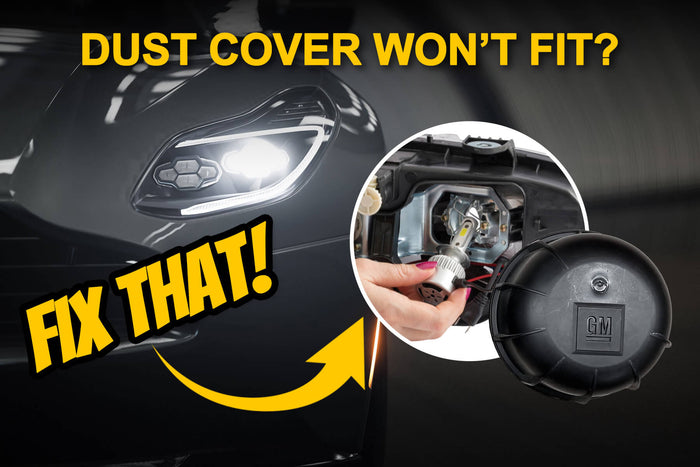
A: The equipment of the dust cover is not necessary. If the original headlight assembly has a dust cover, it is recommended that the dust cover be installed.
Leave a comment